Translate

Monday, April 7, 2014

My Writing Process Blog Tour

I'd like to give kudos to Kyra Halland for inviting me to the Writing Process Blog Tour. This one's been ongoing for quite a while and authors from all over the blogosphere have been weighing in about how they write what they do. Read Kyra's contribution here.

My Writing Process (The Heffinator Style)


1) What am I working on?

As usual, my mind goes in many directions before it finally hones in on one writing project to get it done (or as done as it get can get, anyway). I'm currently working on the first Changeling Sisters novella (Summer 2014) about a minor character in the Year of the Wolf who really surprised me by demanding to share her story about what really happened to her. I'm also formulating the plot for Changeling Sisters III: Year of the Dragon, in which the stakes get higher for our Alvarez sisters, as well as streamlining ideas into my Afterlife Chronicles II cache, so the latter two are still in their nebulous phases.
 
2) How does my work differ from others of its genre?


My work stems off others in the fantasy genre in a lot of ways from a lot of different time contexts, because I grew up reading fantasy favorites Tamora Pierce, Terry Brooks, Roger Zelazny, Octavia Butler, Robert Jordan, Ursula K. Le Guin, T.A. Barron, J.K. Rowling, Eoin Colfer, and those authors can never leave my writing. So in a way, I processed fundamental writing techniques from their books that I really enjoyed--memorable characters, fully-realized fantasy worlds--and channeled them into my own world-building and writing. While I developed my craft, the urban fantasy phenomena was unfolding to a wide-reaching audience. However, high fantasy books like Eragon still enchanted readers as well, so I definitely saw how contemporary and high, epic fantasy elements could combine to create resonating stories that capture the imagination. 

My personal touch is to tweak or turn tropes of the fantasy genre on their head. I'd like to challenge how they came to be that way, or make them feel uncomfortable. Why is a happy ending equivocated with a main character finding their soul mate, when many of us go through many different kinds of soul mates during our lives? What happens when neither the hero or the villain wins, leaving the state of things in an unclear mess? What am I reproducing when invoking "Light" as good and "Dark" as bad; how can I complicate such binaries? How did concepts like the hero's journey or characterizations like Mary Sue/Gary Stues become things, anyway, and how do they serve to constitute what's considered "normal"?

3) Why do I write what I do?

In mainstream fantasy regulated by the traditional publishing market, I did see how a certain dominant narrative was re-articulated again and again. Main characters are often white and heterosexual, as are all of their friends. People of color are relegated supporting roles; gay characters are routinely cast as "the gay best friend". People with differently-abled and marginalized body types are also non-existent, unless the entire story revolves around Character A being fat, for example. We've all heard the stories about publishers pushing for a main character's age to be younger than perhaps what the original manuscript called for (ahem, high school instead of college age). 

When Citlalli Alvarez revealed to me that she would, no ifs, whats, or buts about it, be the lead kick-ass heroine of the Changeling Sisters Series, I realized that I had a choice about whether or not to perpetuate this dominant mainstream narrative. I chose to craft the Changeling Sisters world in a way to disrupt that, to incorporate Korean and Mexican-American culture and language as dominant and just as legitimate as "white", to challenge the mainstream reader with what they may be unfamiliar with, and to spark their curiosity about what they're missing by sticking to traditional publishers who sell a certain kind of story. I'm white, so my presence is still there, and any mistakes I make are my own. But I have the opportunity to write about the world and friends I know, a colorful, diverse world, and I will keep taking that path again and again.

4) How does your writing process work?


*It begins with a question or an idea. For example, with The Tribe of Ishmael (Afterlife Chronicles I), I read Dante's Inferno for class and found myself riveted by one encounter with the demons, who had been cast into Hell to torment wicked human souls for an eternity. I wondered about how Hell would look when built from their views and experiences.  

*So I build the fantasy world, pulling on things I've seen outside of me and more often than not, dreams. Dreams are awesome world-building fuel because they combine things in ways you would have never imagined in waking life. 

*From there, I search for my main character(s) to carry the story and explore their relationship with the world. Have they just been dropped into it? What could have brought them there? How do they interact with each other and why? I'll usually settle on four main characters, one of which is...

*The villain(s)! Where's the points of friction between them and the main character(s)? Where do their interests coincide, in that they could seduce the main character(s)? What's the baddie's back-story (No one ever comes out of a vacuum)?  

*By now the beginning just flows out of me. Easy as pie. Stream of consciousness. It could go in all directions, it touches on a mystery and attracts attention, it's wonderfully bizarre and difficult to make sense of. It might be a sign of my generation: I think in terms of multimedia. I plot out "scenes" through movie or video game frames, and then I translate these visuals to paper. Anyway, beginnings are easy to write because they could go anywhere.

*The middle is tough. There aren't as many possibilities. What gets told and by whom needs to be weighed and re-examined. I might have to go back and re-write the beginning, or re-assess a previously minor character's role. The story is unfolding toward some semblance of an "end," and I have to choose where that resting spot will fall and the degree to which it will be satisfactory. The middle is also difficult because it is where many nuances in character development take place, so they've grown to a point the reader can recognize as "changed" by the time the climax approaches. During this middle part, I often write brief character conversations or scenes I see revealed in the end.

*I like writing the climax. Dispense with all flowery imagery--(although I'm prone to doing that)--just use hard, fast verbs that convey urgency and atmosphere. Then the winding down after the climax isn't so bad either--although by that point, my characters will probably already be waving on a path(s) ahead about where they see themselves going next. The hardest part is to leave them to wave so I can revise, revise, revise, edit, edit, edit, and then glance up to see if they're still there.

*Beta-reading time: I submit the manuscript to people I trust--and people I trust to be honest with me--and hope that what I wrote makes sense. Do they understand what I was trying to do with Character A? To what degree do I succeed? How does the story feel all together? I put away the manuscript and don't look at it for a while so I can re-visit with a fresh pair of eyes. Maybe I write about my waving characters and ideas for future books, but by then, the moment has been lost.

*I collect the varying sources of in-put and continue re-editing. At some point, the manuscript reaches finished-draft status. Then I get to share it with everyone I know and everyone I don't, which makes me incredibly happy! The engagement process with the book continues with every new reader who reads, and I truly enjoy hearing how their reading experience unfolded, what worked, and what didn't. After all, writing is a process and it is constantly in a state of becoming, never finished.


The Writing Process Blog Tour continues! Pop by next week to visit:

Dennis Upkins
Upkins is from Atlanta, Ga. An urban fantasy author, his writing credits include Hollowstone, Stranger Than Fiction, and West of Sunset. Upkins also regularly critiques and analyzes the representation and portrayal of minorities in comics and media as a regular contributor to Ars Marginal. Follow him at DennisUpkins.com and on Twitter, @drupkins.

Also check out:

Autumn M. Birt
Birt, author of elemental and epic fantasy books, shares her thoughts. 

Yvonne Hertzberger
Hertzberger shares her love of magical realism here.

Sunday, April 6, 2014

The Tribe of Ishmael Participates in Kindle Countdown Deals!

Looking to immerse yourself in a dysfunctional, dark, fantastical afterlife journey? Starting Monday, April 7-13th, The Tribe of Ishmael will be available at 70, 50, and 30 percent off on Amazon, slowly returning to its original price by the end of the week. Check it out here, the earlier in the week, the better!


Saturday, April 5, 2014

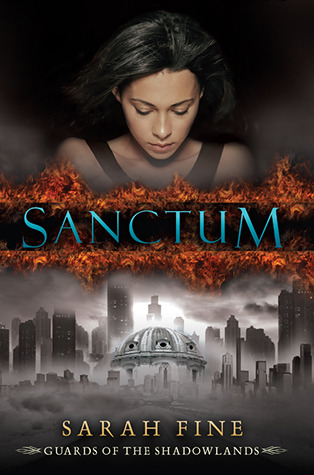
April 2014 Book Review: Sanctum


SANCTUM 

By Sarah Fine

~Book Review~

 
*Warning! Spoilers!*

THERE’S NOTHING like a wholly immersive and unique underworld experience—and Sarah Fine’s Sanctum delivers in terms of the dark and creepy city behind the Suicide Gates. The city is such a complicated, riveting character in this YA paranormal-romance that it practically steals the show!

In the beginning, there is Lela. She is a scarred fighter, which contributes toward why she can’t understand why her best friend Nadia would choose to end her life. Another part has to do with her own experience standing on the brink of suicide—and the sight of the forbidding city she saw waiting for her in the afterlife. Little does she know, she caught a glimpse of the Shadowlands’ Suicide Gates, patrolled by formidable guards and nasty demon-like Mazikin who are intent on bringing more of their kind into the city by taking over human bodies. So when she finds herself in a position to rescue Nadia from her unholy resting place, she takes it.

Along the way, she meets the Captain of the Suicide Gates, Malachi, who reluctantly agrees to help her. We’re treated to the usual goggly-eyed stream of “ohmygosh, he’s smokin’ hotness!” from Lela while Malachi is “intrigued” by her, which instantly sucks all the tension out of where that relationship is going. I’ve definitely grown weary of “eternal love” romance lines, which is probably why I spent less time interested in Malachi for his hot bod, and more time curious about how he became Captain, what he was keeping in the city as much as keeping out, and what he could tell Lela about Fine’s afterlife in general. It was hinted at that there are other “cities” in the Shadowlands for other untimely circumstances of death, and the place the Mazikin are trying to escape from sounds none-too-pleasant. The time Lela initially spends wandering around the city trying to find Nadia were some of the most nail-biting, tense moments, because the Mazikin were still unknown and scary enough to convey how vulnerable Lela was. However, Lela spits back whatever the city throws at her, evil tower that tries to eat her and all, and gains some kick-butt allies in the form of Guards Malachi and Ana.

I’m uncertain of Ana’s background, but if you check out Malachi’s journal entries on the author’s website, you learn of how she comes to join the Guard and that she was a Spanish-speaker—Takeshi is her love interest, and Lela is American but tentatively claims Puerto Rican ancestry, so yay for a strong POC presence. However, I was kind of disappointed that the beginning centrality of Lela and Nadia’s friendship fell by the wayside in favor of romance. Throughout the entire book, Nadia remained a ghost to me—I don’t think I ever really got a sense of who she was, which, in some respects relating to the heavy subject matter, may be the point. Unfortunately, that means I didn’t really feel the connection that would motivate Lela to take the action she does in the end; Nadia just feels too much like a symbol rather than a person.

The plot is very strong and the atmosphere enthralling—I wanted to know what would happen, and I refused to put down the book until I had my answer. However, as I mentioned before about the unique creepiness of the city taking on the semblance of a character in its own right—and in a large part, differentiating The Shadowlands Series from many other YA paranormal/urban fantasies out there—then I’m worried that the engrossing urgency it conveys will be lost in the second book, Fractured, which moves to the evil earthly realm of—high school. I constantly found myself asking more questions about the dark city rather than the characters, so hopefully the Shadowlands will continue to make its menacing presence known in future installments!

Recommended for fans of: Susan Ee, Leigh Bardugo, Jessica Shirvington

Upcoming Book Reviews: Sweet Evil by Wendy Higgins and The Iron Traitor by Julie Kagawa

Wednesday, March 26, 2014

March 2014 Book Review: Artemis Fowl

ARTEMIS FOWL

By Eoin Colfer
~Book Review~

Minor Spoilers!

To wrap up our Ireland-set fantasy book month:

WOW I read this book a long time ago. And personally, I like the old cover :D I remember thinking it made the book seem all mysterious. The back cover bore the cryptic phrase, which went something like: STAY BACK, HUMAN. YOU DON'T KNOW WHO YOU'RE DEALING WITH, and I remember thinking: You're right. I really have no clue.

Then in walked Artemis Fowl, a pale, arrogant kid genius who always gets everything he wants--except for a family. He won me over by the first chapter. With his mother's mental health teetering, his father dead, and the Fowl Manor coffers in trouble, Artemis Fowl decides like any normal twelve-year-old boy that the best solution is to rob a bunch of powerful, underground dwelling fairy folk who have tons of riches. The ever-suffering Butler (his loveable bodyguard) reluctantly agrees to his scheme, and they catch a break when they track down an alcoholic sprite banished to live among the Mud People (that's us), whom Artemis tricks in order to study her Book. All fairies have Books that issue strict protocol to follow, and guidelines about when to replenish their magic. Such a magic-drained fairy should be popping up in Ireland any day now to renew her magic under the light of the full moon. Artemis and Butler hurry to trap her so they can hold her for ransom.

Unfortunately for them, they've captured LEPrecon (Lower Elements Police) captain Holly Short, who although initially surprised by this devious Mud Person's intelligence, soon unhatches several schemes of her own. The Underground fairy folk aren't delicate or romanticized; they're formidable, blaster-wielding, and ultra-technologically advanced. Now that Artemis has a scientific genius centaur, a crude dwarf with a secret weapon, and the whole of LEP coming after him, he'll have to re-evaluate what he really wants. This book aimed for teen and younger readers is a whole lot of hilarity, twists, and inventiveness, with a thought-provoking eco-message and a Code written in the Fairy language that you can crack if you're really a  hardcore fan. You might not be sure how the story ends, but you do know that Artemis has finally found a true opponent in the Fairy Folk.

Recommended for fans of: J.K. Rowling, Rick Riordan, T. A. Barron
Upcoming Book Review: Sanctum by Sarah Fine (I said I'd do this one a while back, sorries! :)

Monday, March 17, 2014

Abroad in Ireland: Dublin


A tale of one girl’s study abroad trip to Galway, Ireland. The university was just one part of it...

Happy St. Patty's Day! You can bet we were listening to this song a lot while in Galway:


And we might have enjoyed the movie P.S. I Love You a bit too much. Anyway.


GALWAY IS A  gorgeous, atmospheric city on the northwest coast of Ireland. The Docks teamed with fishing and sailboats against a backdrop of red, blue, and yellow buildings. Cobblestone paths interweaved past Lynch’s Castle, the colorful Eyre Square, and Galway Cathedral; old bridges overlooked rowing team practices on the River Corrib. Few cars roamed the streets, especially at night when foot traffic was heavy on route to a vibrant night life complete with famous pubs such as The King’s Head, the Quays, and Monroe’s Tavern—and smaller niches (The Cottage Bar in Salthill, Crane Bar on Sea Road) where aspiring musicians are welcome to join onstage bands. Both The Saw Doctors and Dolores and Sean Keane (De Dannan) hail from Galway, and the town hosts a variety of music festivals as well as a famous Arts Festival in July.


WELCOME TO GALWAY

It had always been a dream of mine to study abroad during undergrad. National University of Galway (NUI Galway) caught my eye as set in a unique and smaller city than Dublin, so I figured I could get to know the area better. The university was certainly an English Major’s dream—seminars included in-depth looks at Jane Austen, James Joyce, Oscar Wilde, Y.B. Yeats, and John Milton. It felt different to be studying these authors closer or within their homeland for some of them, like a seminar I ended up taking and really enjoyed about Irish writer/playwright Tom Murphy. There was also a family connection to Ireland—my uncle, who first traveled there on a bike trip in the 70s, slept in old churchyards overgrown with ivy, formed fast friendships, and kept finding a reason to return ever since. The land was a stunning inventor of the word “green” and was written with dark, fascinating histories and the wry attitudes of the people who lived them. I applied to NUI Galway through Arcadia University here in the US, determined to make the financial situation work, and when I was accepted, I boarded a plane in August study for a semester in Galway.


I really should have picked the spring. I hear it rains slightly less then.


DUBLIN


Galway has an airport, but the university program set up the orientation for its international students in Dublin. I arrived with giant roller suitcases in hand, and walked up and down the main riverside street several times before I found the group meeting hostel near the Temple Bar area/Trinity College (I remember the discouraging feeling of being lost, before I figured this was a pretty cool place to be lost in). Our Arcadia student body had been broken into groups of six who would each share rooms, get to know one another, and so have a familiar face to look forward to when we arrived at NUI Galway’s version of dorms—awesome, two-or-three story small houses with full kitchens and baths, all lined neatly up next to one another with the University a 15-20 minute walk down the street, and a Tesco supermarket nearby. Most of the students in the Arcadia group were from East Coast USA, but there were a few from California. So I was the sole Washington student representing—hell yes.


For breakfast, we enjoyed a marvelous spread of bacon, toast, fried egg and tomato, sautéed mushrooms—and the infamous white/black pudding (that might have remained untouched). The day was spent exploring the city. A tour bus dutifully shipped us around the various Dublin hotspots—we snapped pictures of the lovely Botanic Gardens, traipsed through the courtyards of Trinity College, locked ourselves up in Kilmainham Gaol, and peeked in on the Book of Kells. Later that evening we visited my first pub—somewhere in the Temple Bar district—where I discovered for the first time what all the fuss about Guinness was about, and then found another brew that more fuss should be about in the US—Bulmer’s Hard Cider. Crisp, refreshing, amazing. The pint glasses, too, all artfully engraved with Smithwicks or Murphy’s, added something extra—hell, even Bud Light tasted better when served in a stylish pint glass.

 
The cool thing about having castles...you can host events like this: Secret Castle of Magic celebrating Bram Stoker. Photo accredited to Trip Advisor (2014).
  The following morning on our third day in Ireland, all of us still pumped up with adrenaline, we boarded the bus for a three hour drive to the opposite coast (Citylink and Bus Éireann are major bus lines), where the ivy-clad stone courtyards of NUI Galway, like some unearthed Emerald City, were waiting.

To be continued…read Part II here.


Disclaimer: the above is presented as fiction, not fact.

Monday, March 10, 2014

March 2014 Book Review: Iced

ICED

By Karen Marie Moning

~Book Review~

Iced (Dani O'Malley, #1; Fever, #6)

*Minor Spoilers*

IN ICED, Karen Marie Moning returns to ground zero for the paranormal war brewing between fae and humans in none-other-than downtown Dublin, in Darkfever #6, or the Dani O'Malley Trilogy #1. Now, in Year 1 of AWC (After the Wall Crash), in which the fae are freely hunting humans--but industries and nightclubs continue to run as usual--the point of view switches from Mackayla Lane to her 14-year-old sidekick Dani O'Malley, who is hired to figure out the identity of a deadly hoarfrost phenomena freezing nightclubs and leaving both humans and fae dead.

Moning definitely knows how to write characters who will evoke a strong, emotional response. The author claims Dani is still 14 at the time of Iced. I picture her as older and will continue to do so, despite Dani's fretting over her body and the number of sexual innuendos that shoot straight over her head. It might have something to do with her two hinted love interests being immortals who have anything but Dani's best interests at heart. Ryodan and Christian continually feast their eyes on her and make awful comments like, "You're going to make a hell of a woman one day, Dani," while licking their lips in anticipation. It made me cringe a number of times and I was pretty unable to get on board with either guy--particularly Christian. What happened to him? The author can make excuses for his creeper behavior all she wants, but that's all they are: excuses that try to distract from what the reader can clearly see: a super creep! Moning also claimed justification for keeping Dani at age 14 by way of "fourteen-year-olds think about sex, too." Hmmm, let's look at how Dani thinks about sex: she's off fantasizing a schoolgirl-type crush on Barrons and imagining her first kiss, while Ryodan and Christian are picturing something quite...different. Thank Heavens for Dancer, a male character around her age who treats her like a friend and with respect--who would've thought a teenage boy would be the most mature of all the romantic interests! Loved Dancer.

I really liked Dani taking over as the protagonist as well. I was never a fan of Saint Mac (see current Book Review of the Month) . Dani is impulsive, flawed, and has a lot of guilt she wrestles with--all while trying bravely to be a hero. Much more endearing, and I'd love more of her and Dancer teaming up to kick Fae a**. 

You might have noticed that most of this review focuses on characters, with little attention to the plot. That's because the book seems to forget the plot, too, in favor of witty banter and trips down memory lane of previous Darkfever books. Moning writes these scenes extraordinarily well and at no instance did my interest wane--but on a number of occasions, I did want to shake Dani and shout, "Okay! Enough chitchat! Get back to the investigation!" After all, a mysterious frost overtaking Dublin was a very intriguing idea, and the sinister new Fae that Moning introduces are gold--especially the villainous Crimson Hag! Loved her, she was superbly freaky! 

I'd definitely classify this book as "adult" despite the main character's age being younger than most characters in YA novels. However, I do love the world-building that goes into the Darkfever books, and it was a pleasure to return to the dark atmosphere of Dublin where one turn down a wrong alley could be your last. Suspenseful, entertaining, and an "oh, snap!" type cliffhanger at the end leaves me excited to see what happens next in Book #2.

Recommended for fans of: Ilona Andrews, Nalini Singh, Kim Harrison
Upcoming Book Review: Artemis Fowl by Eoin Colfer

Tuesday, March 4, 2014

March 2014 Book Review: Eden Forest

It's March! Since we're heading to Ireland for our travel posts, and a certain St. Patrick's Day is coming up, this month will feature fantasy books connected to Ireland. Enjoy, & check out the Book Review page for a re-look back at my review of Karen Marie Moning's popular Darkfever book, set in Dublin.


EDEN FOREST

By Aoife Marie Sheridan

~Book Review~


*Minor Spoilers Alert*

I received a copy of Eden Forest in exchange for an honest review

IN A PARALLEL WORD
to our own called Saskia, where the people share affinities with the elements fire, air, water, earth, and spirit in correspondence to the fallen angels who founded their planet, an expecting mother flees her lover—the king—and an evil queen to Earth. In present-day Ireland, young Sarajane grows up unaware of her heritage, but agents of the warring king and evil queen draw her to Saskia.

The cover is fantastic and mysterious, so you go into this story not quite knowing what to expect. The story rotates around at least three points of view—all women, which was nice—and I love that Sarajane develops a deep relationship with her mother instead of the mother being MIA, or dead, ect. The idea of affinities for different elements was awesome, as many of my favorite fantasy series like Avatar (TV) and Vampire Academy (Richelle Mead) incorporate this, and I’m looking forward to Sarajane’s exploration of her powers.

The points-of-view, one of which is Bellona, the aforementioned “evil queen” type character, adds some uniqueness to the fantasy. The ending wraps up in an excellent spot to continue the series, and once Sarajane learns to fight, there’s no stopping her. I also liked her relationship with her lady-in-waiting, whom at first is introduced as the beautiful perfect girl but is later developed to have deeper motivations than what Sarajane sees.

However, I did remain a little unconvinced as to how Eden Forest is different from other books in the genre. Even with three viewpoints, I found the actions on all of the characters’ parts to be predictable, and longtime fantasy readers may find Sarajane to be a little Mary Sue-ish (destined to save the world, hinted to be the most powerful of all elemental users, ect). A lot of the magic and fantasy world-building is introduced at the beginning of the story, so when it shifts to Sarajane going about her normal life in Ireland, I was pretty impatient for Tristan to show up!

I’m looking forward to the rest of the series, to see what exactly convinced Bellona to take the actions she has today, and to see more of these fallen angels, because those are always fun. Nice, creative start to the series with strong female characters.

Recommended for fans of: Christopher Paolini, Tamora Pierce, Terry Brooks

Upcoming March Book Review: Iced by Karen Marie Moning (both authors have Marie as a middle name, funny!)